

Oil Trap & Enclosure Cleaning
- Fully insured, COI on request
- Nights & weekends
- Written, itemized proposal
- Before & after photos
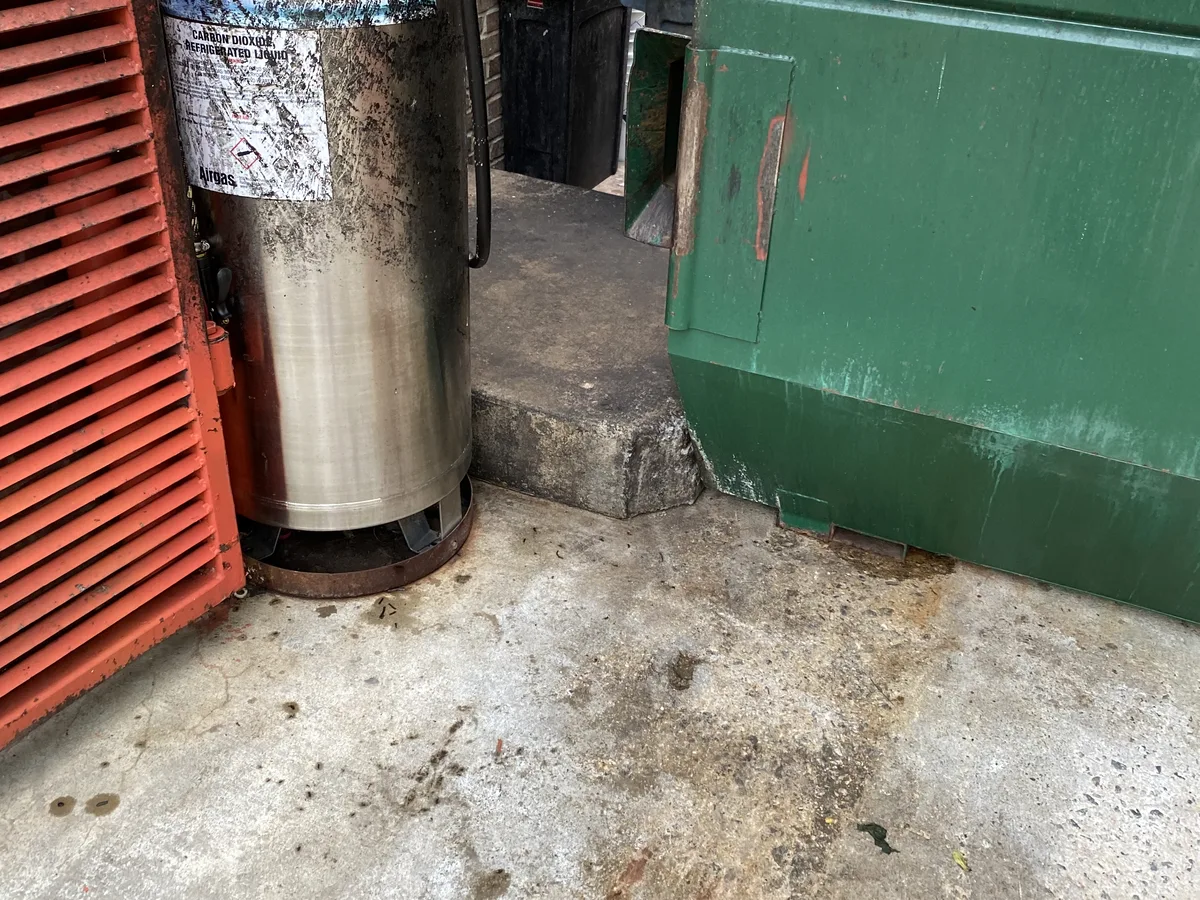
Oil trap pad and enclosure cleaning for restaurants, shopping centers and other commercial properties in metro Atlanta. We clean the area around oil traps and oil tanks, including the concrete pad and the enclosure, using hot water and a commercial degreaser to remove as much grease, grime and staining as possible.
This is surface cleaning around the equipment. We do not pump, service, move or clean the traps or tanks themselves.
What we clean
We clean the concrete and walls that grease reaches:
- The concrete pad under and around oil traps and oil tanks
- Enclosure walls
- Oil containment pits and pads
- Grease spills and drips on the surrounding concrete
- Grease tracked from the enclosure onto nearby walkways and drives
How we do it
Grease needs heat and degreaser, not just pressure. We apply a commercial degreaser, clean with hot water pressure washing, and rinse. Heavy buildup takes repeated passes.
The traps and tanks need to be removed before the visit for us to reach the whole pad. The crew cleans around anything left in place, and the quote says which applies, so the coordination happens before anyone arrives.
Oil that has soaked into concrete for a long time may lighten without fully coming out, and we tell you what to expect before we start. We also plan where the wash water goes; if ownership has drain or environmental requirements, we write them into the scope.
When to schedule
Clean the area when grease starts tracking onto the surrounding concrete, before an inspection, or on the same visit as the dumpster pads. Pads with regular spills can go on the same monthly or quarterly schedule as the dumpster pads. The work is done overnight or early in the morning, around tenant hours.
What affects the quote
Each area is priced from the site. These are the things that move the number:
- The size of the pad and enclosure
- How much grease has built up and how long it has been there
- Whether the traps and tanks are removed before the visit
- Water access near the enclosure
- Timing around tenant hours
- Whether dumpster pads or nearby concrete are cleaned on the same visit
Why property managers hire us
Because the scope is honest about what can and cannot be cleaned before anyone arrives.
- A written scope that states what is excluded, including the traps and tanks themselves
- Fully insured, with certificates of insurance on request
- Night and early-morning scheduling, and before-and-after photos with the invoice
Why it matters
Safety
Grease on concrete is slippery underfoot for staff working around the enclosure. Degreasing the pad and the path to it removes that film.
Appearance
Oil stains spread from the enclosure across service areas and get tracked through the lot. Cleaning the pad and the concrete around it removes them at the source.
Longevity
Grease left on concrete soaks in deeper the longer it sits. Removing it on a schedule keeps it from setting into stains that will not fully come out.
Health
Grease and food residue around oil tanks cause odors and draw pests. Removing the buildup from the pad and enclosure walls deals with both at the source.
How a job runs
- WalkthroughWe see the property, the surfaces and the access, and note anything that needs protecting.
- Written proposalAn itemized proposal you can send to an owner or a board, with a certificate of insurance if you need one.
- Scheduled around tenantsNights, weekends or zones, so entrances stay open and tenants get notice.
- Before & after photosYou get photos of the finished work for your records and your owners.
Questions about oil trap & enclosure cleaning
Do you pump or clean out grease traps?
No. We clean the area around oil traps and oil tanks: the pad, the enclosure and the surrounding concrete. We do not pump, service, move or clean inside the traps or tanks. For a complete result, the traps and tanks should be removed before the visit so we can reach the whole pad; otherwise we clean around them, and the quote says which applies.
How do you remove grease from the concrete around an oil tank?
With a commercial degreaser and hot water pressure washing, which break the grease down so it can be lifted and rinsed away. Heavy buildup takes repeated passes. Grease that has soaked into the concrete for a long time may lighten without fully coming out, and we tell you what to expect before we start rather than after.
Can the oil trap area be cleaned on the same visit as the dumpster pads?
Yes, and it usually makes sense to. Both areas collect grease and both are cleaned with hot water and a degreaser, so they can be done on the same visit, each priced as its own line. The work is scheduled overnight or early in the morning, around tenant hours and around when the containers and tanks can be moved.
What do you need from us before cleaning an oil trap area?
Four things help most: the traps and tanks moved or removed if possible, a working water spigot nearby, a time when the tenant is closed, and any drain or environmental requirements set by ownership. Photos of the area help us scope it accurately. If the traps cannot be moved, we clean around them and note that on the quote.
Where we work
Oil Trap & Enclosure Cleaning for commercial properties across metro Atlanta, including:
Related services
Need oil trap & enclosure cleaning for your property?
Tell us about the site and we will schedule a walkthrough and send a written proposal.
